
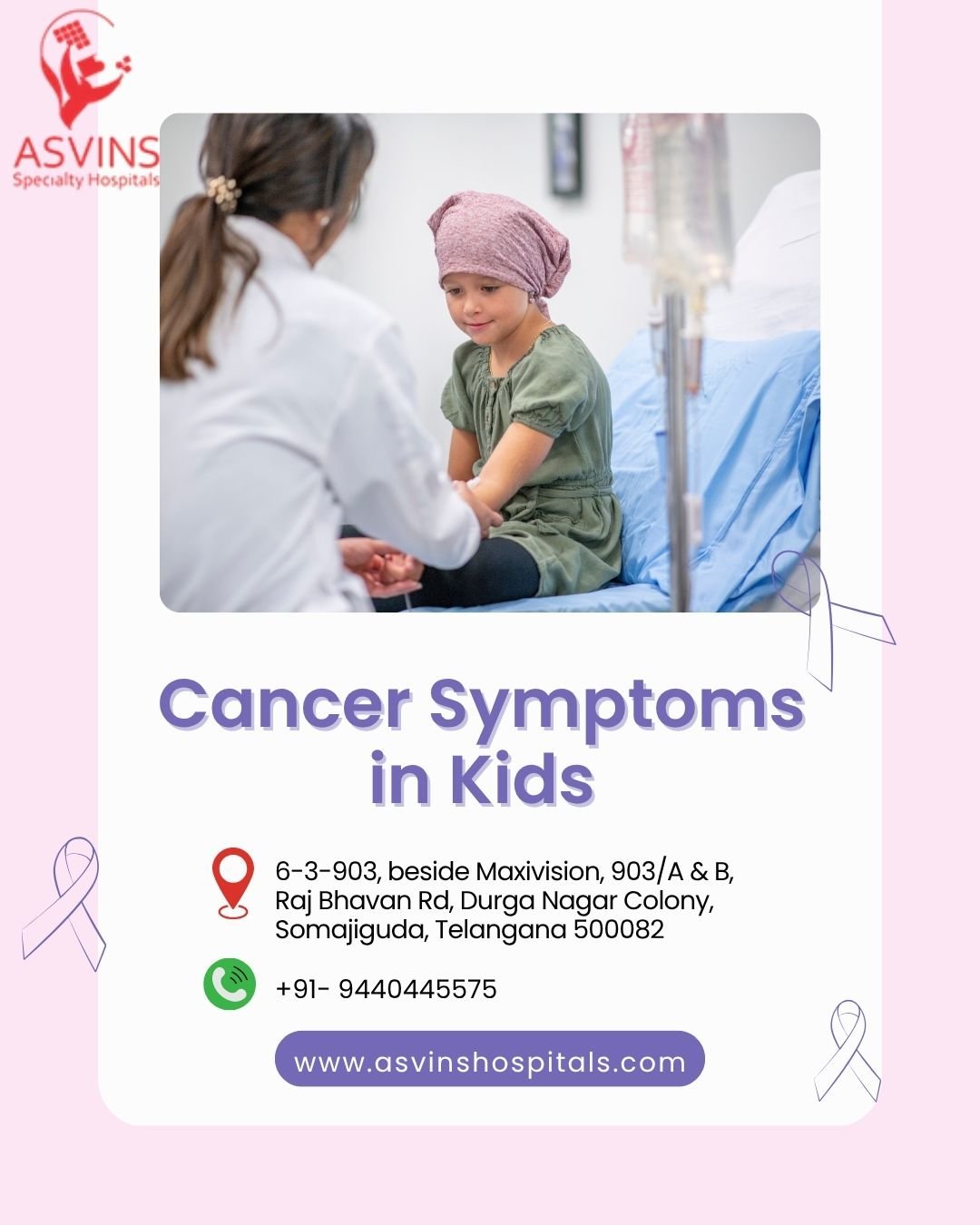
At Asvins Specialty Hospital in Hyderabad, we recognize that cancer can be an alarming diagnosis, especially for children and their families. Childhood cancers are relatively rare, but they do occur, and being informed about the signs and symptoms can lead to early diagnosis and treatment, which significantly improves outcomes. This guide aims to educate parents, caregivers, and teachers about the common symptoms of cancer in children, empowering them to act promptly and seek medical advice when necessary.
Introduction to Cancer in Children
Cancer in children is different from cancer in adults. While types such as leukemia, brain tumors, and neuroblastoma are the most common in children, the biological behaviors and responses to treatment can vary significantly. As with adults, early detection is key in managing pediatric cancers effectively.
Each child’s experience with cancer is unique, and symptoms can vary widely depending on the type of cancer and the child’s age. Understanding the warning signs and being vigilant can save lives.
Common Types of Childhood Cancers
Before delving into the symptoms, it helps to understand the frequent types of cancers that occur in pediatric patients:
- Leukemia:
The most common type of cancer in children, leukemia affects the bone marrow and blood. There are various forms, including acute lymphoblastic leukemia (ALL) and acute myeloid leukemia (AML).
- Brain Tumors:
These can occur in various parts of the brain and can affect normal brain function, leading to different symptoms depending on their location.
- Neuroblastoma:
A cancer that arises from immature nerve cells and typically occurs in infants and young children.
- Wilms Tumor:
A kidney cancer that primarily affects children, Wilms tumor usually occurs in children aged 3 to 4 years.
- Retinoblastoma:
This type of cancer forms in the retina and most commonly affects children under the age of 5.
- Hodgkin Lymphoma and Non-Hodgkin Lymphoma:
These are cancers of the lymphatic system, affecting the body’s ability to fight infections.
Recognizing the Signs and Symptoms:
Awareness of cancer symptoms is critical for early detection. While these symptoms might not definitively indicate cancer, they warrant further examination by a healthcare professional:
- Unexplained Weight Loss
A notable and unexplained loss of weight is one of the more common symptoms. While children often grow at different rates and fluctuating weight can be normal, an unexpected drop in weight (especially if it’s more than 10% of their body weight) should be evaluated.
- Persistent Fatigue or Weakness
Constant fatigue that doesn’t improve with rest might be a sign of an underlying health issue, including cancer. Children diagnosed with cancer often present as unusually fatigued compared to their peers, significantly impacting their daily activities and quality of life.
- Frequent or Unexplained Fever
Fever is the body’s natural response to infection, but persistent or recurrent fevers that last for extended periods (more than a week) without an identifiable cause warrant further investigation, particularly in conjunction with other symptoms.
- Pain in Bones or Joints
Children frequently experience growing pains, but persistent, localized pain—especially if it interrupts their daily activities and sleep—could signify a more serious condition, including leukemia or bone tumors.
- Changes in Appetite
A sudden loss of appetite or significant changes in eating habits may indicate that something is wrong. Similarly, difficulty swallowing or unexplained nausea can also suggest underlying health issues needing evaluation.
- Swelling or Lumps
The development of any lump or swelling in the abdomen, neck, or elsewhere on the body should be monitored carefully. Many children may develop benign lumps, but it’s crucial to get any new, unusual masses checked by a qualified healthcare provider.
- Pale or Jaundiced Skin
Paleness can occur due to anemia, which can sometimes be associated with blood cancers, while jaundice (yellowing of the skin and eyes) can suggest liver involvement or other issues that require immediate attention.
- Unusual Bruising or Bleeding
Frequent bruising or bleeding that seems excessive for minor injuries should raise concerns. Similarly, if a child experiences bleeding gums, frequent nosebleeds, or blood in urine or stool, it’s vital to seek medical attention.
- Vision Changes
Blurry or double vision, an apparent change in vision, or other visual abnormalities may indicate a problem such as a brain tumor. Children with retinoblastoma may present with a white spot in the eye or a change in the color of the pupil.
- Changes in Bowel or Bladder Habits
A noticeable change in bowel habits, such as persistent diarrhea or constipation, could indicate underlying conditions.
